week 1
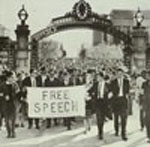
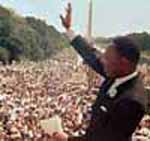
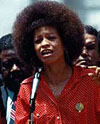
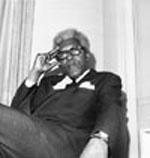
What does it mean to rethink the 1960s?
The Research Projects in Brief
One-paragraph statement of research topic due. (Note: Make enough copies for all course participants because we will be sharing these.) It must include:
- working title
- general statement of primary research problem and/or question to be explored
- bibliography: at least 3-4 preliminary sources
Please note that Barber and Bailey include an extensive annotated bibliography to book-length secondary sources. This is a good place to start, but you should also become familiar, if you aren’t already, with using a variety of materials including encyclopedias, microforms, audio and film recordings, journal articles, etc. Many of these are available in Knight Library or through interlibrary loan, which requires a little advance planning. In addition, electronic indexes (many available through JANUS) are indispensable for conducting research. These will help you build a good bibliography of primary and secondary sources for your project.
These indexes include, but are not limited to:
• America: History and Life
• JSTOR: The Scholarly Journal Archives
• Readers’ Guide Retrospective
• WorldCat
There are a number of excellent web sites about the 1960s on the Internet,
and you should certainly use them if they are relevant to your project.(See
the list at the bottom of the course information
page.) But there’s a lot of junky history on the net as well, so
be critical about what you use. I do not want to see bibliographies consisting
largely or exclusively of internet materials.
Reading from Farber and Bailey: part 1 (pp. 3-76). Also choose one essay from part 2 and one essay from part 4 to read and come to class prepared to say something about how they relate to your own interests.
week 3
Nuts and Bolts: Getting Acquainted With Sources
Discussion of the one-paragraph research statements. Each student should come to class with a few written comments and suggestions for other students. We will discuss these in class as a way of expanding the research proposals and moving them forward.
Levy: Choose eight documents or other sources on topics related to your own interests and come to class prepared to talk about them. The point is not only to grapple with what sources are and what they say, but to approach them as historians do. What kind of evidence do these sources offer? About what? What are the advantages and limitations of any particular source?
Please also bring in two sources from your own research thus far, one primary source and one secondary source.
Nuts and Bolts: What Historians Do With the Sources They Use
Three-page research prospectus due. (Note: Make enough copies for all course participants because we will be sharing these.) It must include:
- working title
- detailed statement of primary and secondary research problems and questions
- tentative outline: the major topics you plan to cover and the order in which you plan to cover them
- bibliography: at least 15-20 sources
We will continue the discussion of using and interpreting sources. Each student should come to class with one example of a primary source and one example of a secondary source drawn from your own research project. We will discuss these and talk about how to make the most effective use of sources as evidence and basis for interpretation.
Nuts and Bolts: Bibliographies, Organization, Outlines, Writing, Revising, and Other Elements of Paper-Writing
Please write an opening paragraph for your paper, make 14 copies, and bring it to class.
Resource: The Stages of Writing Research Papers

Student Presentations
Resource: Guidelines for Research Presentations
Brian Baker, "The Psychedelic Movement Within the Field of Psychology"
Robert Stone, "Becoming a Man: The Memphis Sanitation Workers' Strike, 1968"
Jessica Tosti, "Folk-Rock Music's Response to the Vietnam War"
Student Presentations
Resource: Guidelines for Research Presentations
Katie Turner, "The Power of Belligerence"
Sarah Shoop, "Oregon Students' Summer of Freedom"
Alex Richanbach, "Sidney Poitier: A Patch of Brilliance"
Malerie McCarty, "Cultural Expressions of Vietnam Through Music"

Student Presentations
Resource: Guidelines for Research Presentations
Phil Chesbro, "Private School as a Response to Engel v. Vitale"
Olivia MacKenzie, "Memory Through History: How Textbooks Change the Past"
Mike Churchill, "Countering the Counter Culture: The Reactonary Efforts of the Radical Conservative Youth"

Student Presentations
Resource: Guidelines for Research Presentations
Catherine Roller, "More Than Just Mothers: 'Having It All' "
Matt Clinton, "Military Strategies: An In-Depth Look at the Vietnam War"
Robert Bick, "Capital Punishment in the 1960s"
Alison Tipton, "With Flowers in Their Hair: The Rise and Fall of the Haight-Ashbury Community, 1965-1970"

Student Presentations and Social Gathering
Resource: Guidelines for Research Presentations
Exam Week
Research papers due on Wednesday, June 13, 2007 by noon in 321 McKenzie Hall.